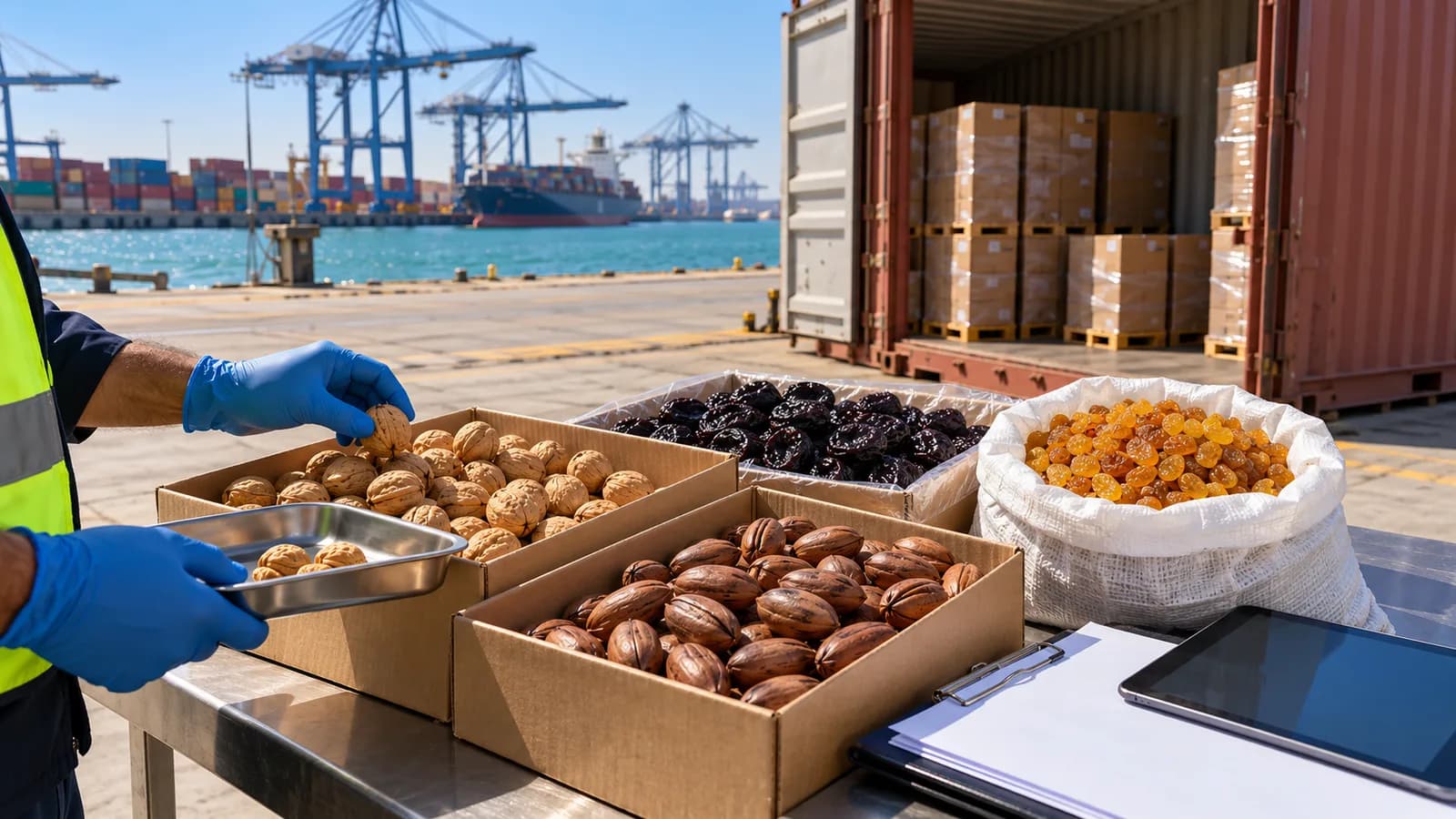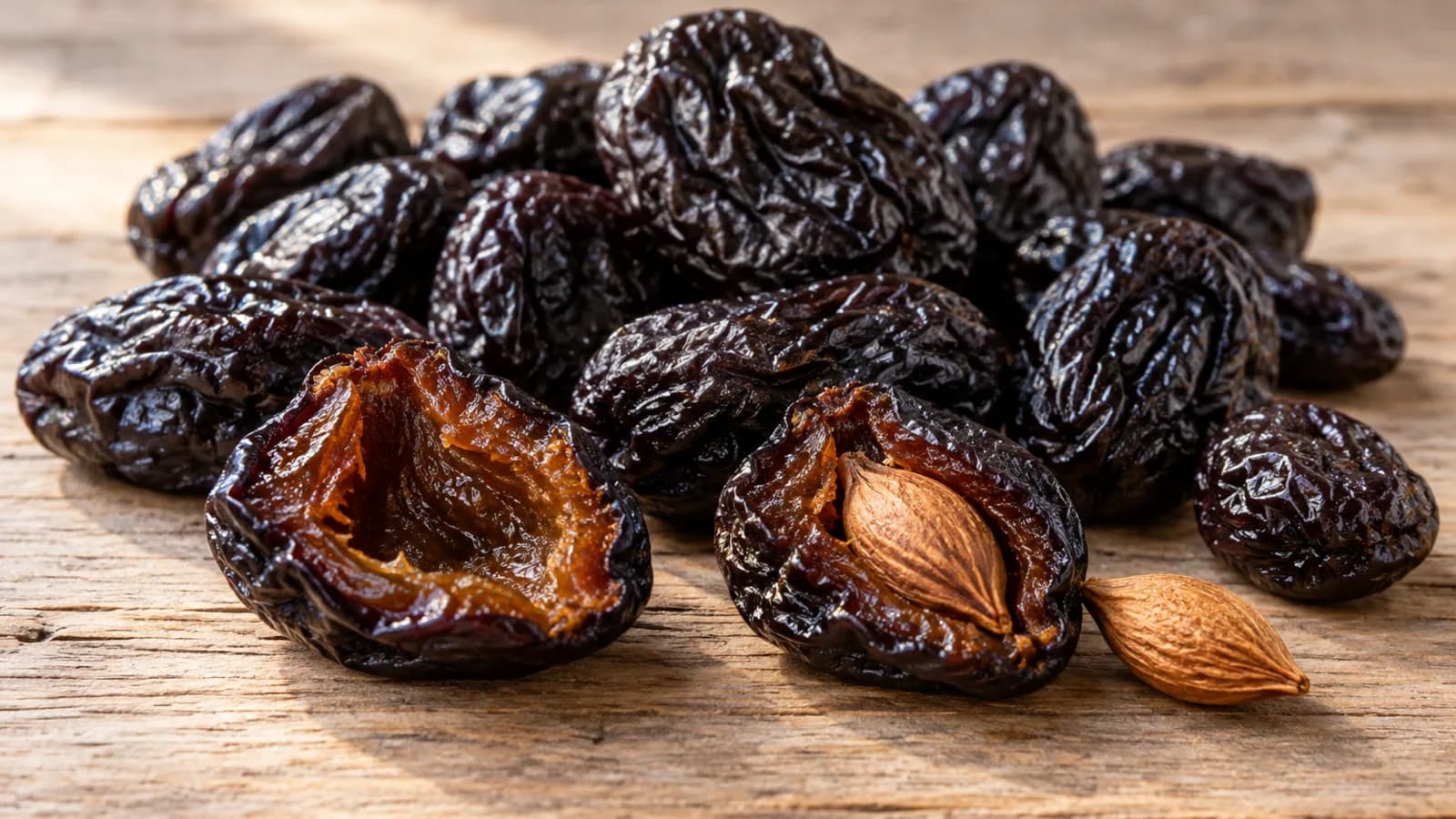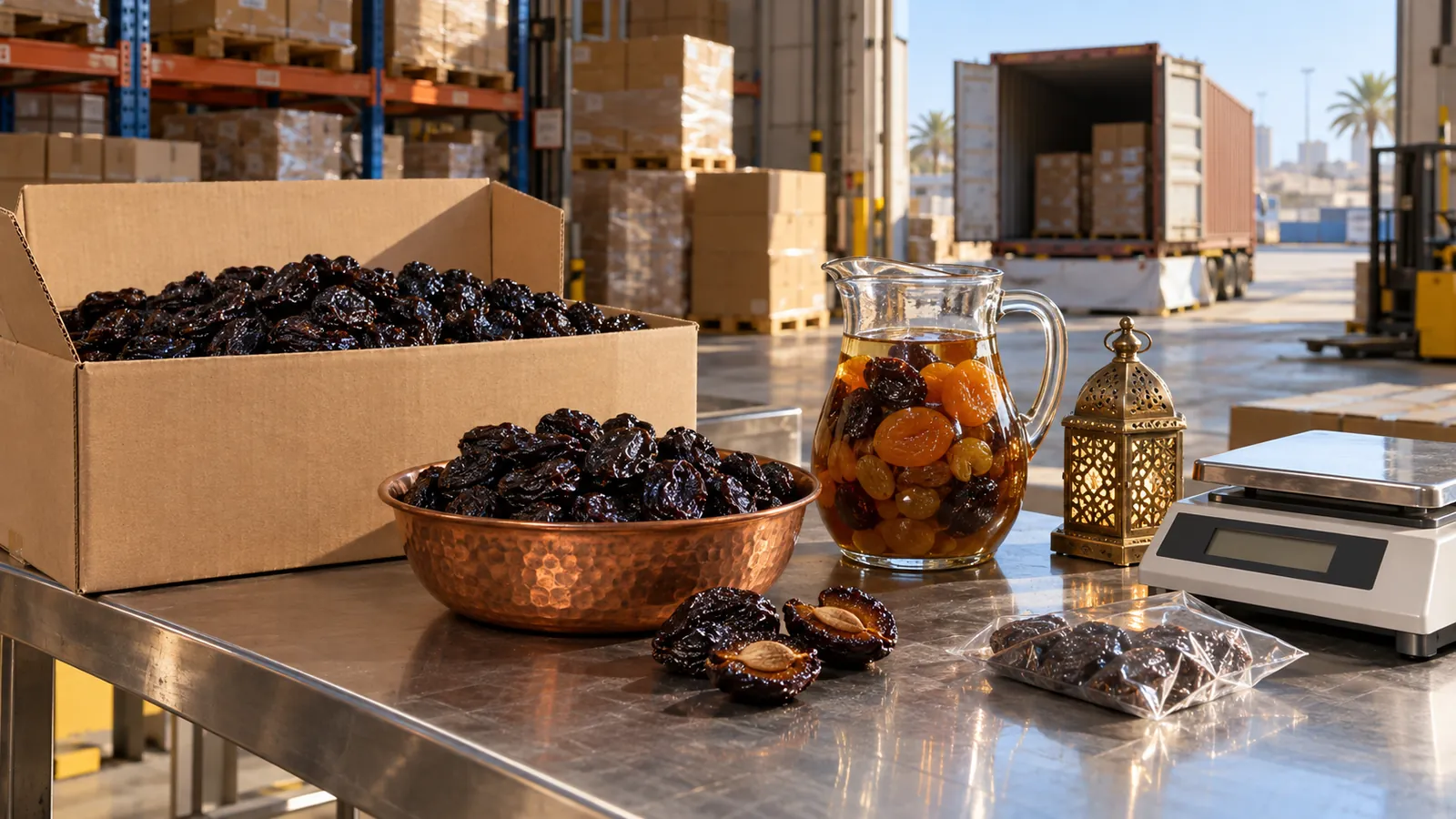
Argentina was Saudi Arabia's top prune supplier in 2023, 2024 and 2025. In 2025 it supplied 51% of the value the Kingdom imported: 296 tonnes worth USD 1.10 million, according to UN Comtrade. That is true and it is good news, but it needs careful reading: the market is small, the lead is three years old, and the Argentine and Saudi statistics do not tell the same story.
The short answer:
- The facts: Saudi Arabia imported USD 2.14 million (641 t) of prunes in 2025, almost double 2024. Argentina ranked first with 51%; Chile second with 23%.
- The time caveat: until 2022 the top supplier was Chile (in 2020, 2021 and 2022). Argentina took the lead in 2023.
- The size caveat: Saudi Arabia accounts for 0.8% of the value of Argentina's prune exports. Brazil takes 74%. For Chile, the Kingdom is 0.16%. Argentina is first among the two South American origins, and neither of them treats this market as a priority.
- The route caveat: between 2019 and 2024, Argentina reports not a single direct shipment to Saudi Arabia, while the Kingdom records 100 to 119 tonnes of Argentine origin in 2023 and 2024. In 2025 there are 95 t shipped directly against 296 t counted on arrival. Most of it most likely comes through intermediaries.
- Price does not explain it: Argentine prunes arrive at USD 3,724/t CIF, 6% below Chilean (3,968) and 11% above the market average (3,342). Neither the duty (5% for every origin) nor the calendar (the harvests coincide) tells the origins apart.
- Availability: the 2025/26 Mendoza crop was cut by hail and Ramadan 2027 starts on 8 February: anyone without a contract by the end of October is late for this season.
1. Who sells prunes to Saudi Arabia: the 2019–2025 series
Prunes are a small market in the Kingdom, but they have grown fast: from USD 0.45 million in 2019 to USD 2.14 million in 2025. This is the position of the two South American origins year by year:
| Year | Total imported | Argentina | Chile | Top supplier |
|---|---|---|---|---|
| 2019 | USD 0.45 M · 165 t | 0.05 M · 12% · 4th | 0.09 M · 21% · 2nd | U.S. (25%) |
| 2020 | USD 0.83 M · 324 t | 0.21 M · 25% · 2nd | 0.28 M · 33% · 1st | Chile |
| 2021 | USD 0.49 M · 140 t | 0.02 M · 4% · 8th | 0.11 M · 21% · 1st | Chile |
| 2022 | USD 0.99 M · 292 t | not listed | 0.36 M · 36% · 1st | Chile |
| 2023 | USD 1.34 M · 290 t | 0.46 M · 35% · 1st | 0.21 M · 16% · 2nd | Argentina |
| 2024 | USD 1.15 M · 362 t | 0.36 M · 31% · 1st | 0.25 M · 22% · 2nd | Argentina |
| 2025 | USD 2.14 M · 641 t | 1.10 M · 51% · 1st | 0.49 M · 23% · 2nd | Argentina |
Source: UN Comtrade, imports reported by Saudi Arabia, HS 0813.20 (dried plums), CIF value; accessed 10 October 2026. For 2023 Comtrade shows the same value per tonne for every origin, which points to an estimated weight: the comparison is therefore made in value.
Three readings:
- The lead is recent. In 2021 Argentina was eighth with 4%, and in 2022 it did not appear at all. Going from nothing to first in two years is what happens in a market where a few transactions move the table: 296 tonnes is what a handful of importers buy.
- The gap widened in 2025. The market almost doubled and Argentina took almost three quarters of the increase: from 0.36 to 1.10 million dollars (0.74 of the 0.99 million the total grew).
- What Argentina gained, Chile held. Chile's value also rose (from 0.25 to 0.49 million). It is not a displacement: Chile stayed second. It is a growing market in which Argentina grew more.
2. What the number does not say
It is a tiny market for the seller
Saudi Arabia is the destination for USD 0.32 million and 95 tonnes of the USD 38.4 million and 16,501 tonnes of prunes Argentina exported in 2025, according to Argentina's own export declarations: 0.8% of the value. Brazil takes 74%, Egypt 8% and the Emirates 0.5%.
| Destination of Argentine prunes, 2025 | Value | Tonnes | USD/t | Share of value |
|---|---|---|---|---|
| Brazil | 28.28 M | 9,740 | 2,903 | 73.6% |
| Egypt | 2.92 M | 999 | 2,927 | 7.6% |
| Saudi Arabia | 0.32 M | 95 | 3,340 | 0.8% |
| Emirates | 0.19 M | 62 | 3,086 | 0.5% |
| Total | 38.42 M | 16,501 | 2,329 | 100% |
Source: UN Comtrade, exports reported by Argentina, HS 0813.20, FOB value; accessed 10 October 2026.
For Chile the proportion is smaller still: it exported USD 305 million and 87,542 tonnes in 2025, 27% of it to China, and 118 tonnes (0.16%) to Saudi Arabia. Being the top supplier to the Kingdom means being first in a market that neither origin treats as a priority. That is an opportunity (nobody is defending it) and a warning (it can be lost with one change of buyer).
Saudi and Argentine statistics do not match
Saudi Arabia records the country of origin of what it imports; Argentina records the destination to which it declares shipping. For Chile the two figures are close in 2023 and 2025 (in 2024 the Kingdom counts 2.5 times more). For Argentina the gap repeats every year:
| Year | Saudi Arabia counts as Argentine origin | Argentina declares shipping to Saudi Arabia | Chile: Saudi Arabia counts / Chile declares |
|---|---|---|---|
| 2023 | 100 t · 0.46 M | no shipments | 46 t / 42 t |
| 2024 | 119 t · 0.36 M | no shipments | 65 t / 26 t |
| 2025 | 296 t · 1.10 M | 95 t · 0.32 M | 124 t / 118 t |
Source: UN Comtrade, imports of Saudi Arabia and exports of Argentina and Chile, HS 0813.20; accessed 10 October 2026.
The most likely explanation is that a good share of the prunes of Argentine origin reach Saudi Arabia through third parties: a trader in the Emirates or in Egypt who buys them, re-ships them and declares them under their own destination. This is an inference, not a published figure, but it fits two facts: Egypt and the Emirates are among the destinations Argentina does declare, and until 2026 the Emirates worked as the usual gateway to the Gulf (our Saudi Arabia guide).
The commercial consequence, if the interpretation is right, is concrete: the direct Argentina–Jeddah channel barely shows up in Argentine statistics until 2025. What is sold as "Argentine prunes" to a Saudi importer often passes through an intermediary. For a Saudi importer or repacker, dealing directly with a Mendoza supplier is an option that has been hard to come by.
Price does not fully explain it
In 2025 Saudi Arabia paid these CIF values per tonne for prunes:
| Origin | USD/t CIF, 2025 |
|---|---|
| Chile | 3,968 |
| Argentina | 3,724 |
| Emirates (re-exports) | 3,358 |
| Market average | 3,342 |
| United States | 3,322 |
| Pakistan | 2,465 |
Argentine fruit costs 6% less than Chilean, but it is not the cheapest: Pakistan is a third cheaper and holds 5% of the market. The Saudi buyer is not paying the lowest price. And at origin, what Argentina declares shipping to Saudi Arabia is valued at about USD 3,340/t FOB, 15% more than Brazil pays (2,903): the Kingdom appears to buy the upper end of the Argentine range. We do not know whether that is size, format or presentation; the statistics do not say.
3. So why Argentina?
The honest answer is that no structural factor separates Argentina from Chile in Saudi Arabia:
- The duty is the same. The GCC applies 5% to prunes from every origin, with no preference for any (our Saudi Arabia guide, using the ZATCA integrated tariff).
- The calendar is the same. Mendoza and Chile harvest in the southern summer and offer new-crop fruit from April; California fruit arrives in September–October (our prune guide).
- The fruit is the same. In both countries the dominant variety is D'Agen.
What can be said is more modest: Argentina has a moderate price advantage (6% below Chile), competes against an origin that barely sells in Saudi Arabia (Chile places 0.16% of its exports there), and in a market of 641 tonnes a few transactions are enough to top the table. It is a position that can be won and, for the same reason, lost: Chile was first between 2020 and 2022.
For the importer this is good news: there is no monopoly and no entrenched preference, so a second origin comes in without colliding with an established buying habit. For the exporter it is an obligation: the lead is not inherited, it is offered every season.
4. What the Saudi importer buys: the specification
There is no public statistic saying which size or format Saudi Arabia prefers. The offer has to be built on a recognised standard and on what customs requires. The international reference is the UNECE DDP-07 standard for prunes, in its edition of 28 November 2025, which sets out the following:
| What | What the standard says | What the offer should state |
|---|---|---|
| Style | Unpitted or pitted; pressure-pitted is treated separately | The style, using the standard's wording |
| Moisture | Maximum 40% since the November 2025 revision (previously 35%); above that it must be labelled "high moisture" | The measured moisture of the lot and whether it is natural or tenderised |
| Size | Number of prunes per 500 g or per pound (453 g); pitted prunes are sized after pitting | The range (for example 40/50 per pound) and the unit. Our guide has a conversion table |
| Class | Class I or Class II, with defect tolerances | The class |
| Marking | Origin, class, size, net weight and, for high-moisture fruit, a best-before date | All of it in Arabic, with printed dates |
And what Saudi Arabia adds, as explained in the Kingdom guide:
- 5% duty on CIF value, plus 15% VAT.
- SFDA registration of the company and the product, done by the importer.
- Arabic label, with production and expiry dates printed on the pack, not on a sticker.
- Mycotoxins: the Saudi standard sets 4 µg/kg of total aflatoxins for dried fruit sold for direct consumption. The EU is stricter on plums (2.0 µg/kg of ochratoxin A), so a lot analysed against EU limits also meets the Saudi ones; we explain it in the pesticide MRL guide.
- Preservatives: tenderised prunes (28 to 35% moisture, according to our technical guide) need a preservative or pasteurisation. We have not verified which additives and limits Saudi rules allow: before quoting it, the importer must confirm with the SFDA, and the offer must state how the fruit is preserved.
- Route: CFR or CIF Jeddah with the port named, and two weeks' margin on the 36 to 38 day transit from Buenos Aires.
5. The calendar: Ramadan closes at the end of October
Ramadan 2027 starts around 8 February and importers want the goods in their warehouse six to eight weeks earlier. From Buenos Aires that means shipping between mid-October and early November; we detail it in the Ramadan 2027 buying calendar. Prunes are an ingredient of khoshaf, the Ramadan dried-fruit compote.
Three things determine availability this season:
- The 2025/26 Mendoza crop was short. The provincial government forecast 72,879 t of fresh fruit against 97,728 t the previous season, because of hail (Government of Mendoza). At about 3 kg of fresh fruit per kilo of dried, that is roughly 15,000 to 24,000 tonnes of dried prunes: the 2026 supply is smaller than last season's.
- Brazil competes for the same product. It takes almost three out of every four dollars of Argentine exports. An offer for the Gulf has to reserve volume before it is allocated.
- Anyone without a contract by the end of October is late for this Ramadan. What is negotiated in November and December serves for replenishment, for Eid al-Adha (16 May 2027) and for the new crop, whose fruit is available from April.
For those planning with more margin, Gulfood 2027 (15 to 19 March, in Dubai) is the fair where 2027 southern-hemisphere crop contracts are closed.
6. How it is sold: to whom and how you get paid
Prunes reach the Saudi consumer through three buyer profiles, described in more detail in the Kingdom guide: the wholesale importer, who buys full containers before Ramadan; the repacker and roaster, who splits lots and sells under their own brand; and the bakery, confectionery and hospitality industry, which buys on technical specification. You do not sell to the big chains directly: they pay at 60 or 120 days.
On the first transactions, an irrevocable letter of credit or advance payment, and open account only once there is a relationship. And because the Emirates are the other market where Argentine prunes compete (2nd in 2023, with 268 tonnes), it is worth reading the Emirates and GCC guide if the importer operates in both.
Frequently Asked Questions
Who is Saudi Arabia's top prune supplier?
Argentina, since 2023: 51% of the value imported in 2025 (296 tonnes, USD 1.10 million), according to UN Comtrade. Chile was first in 2020, 2021 and 2022, and is now second with 23%.
How many prunes does Saudi Arabia import?
USD 2.14 million and 641 tonnes in 2025, almost double 2024 (USD 1.15 million, 362 tonnes). It is a small market: in 2019 it was USD 0.45 million.
What duty do prunes pay in Saudi Arabia?
5% on CIF value, plus 15% VAT. It is the GCC common external tariff and it applies equally to Argentina, Chile and the United States: no origin has a preference. Confirm the code (0813.20) in the ZATCA tariff search before each quote.
Can you sell directly from Argentina to Saudi Arabia?
Yes, and it is uncommon. Argentina declared no direct shipment to the Kingdom between 2019 and 2024 and declared 95 tonnes in 2025, while Saudi Arabia counted 296 tonnes of Argentine origin that year. The difference is usually goods arriving through intermediaries. With Hormuz closed, a direct shipment goes to Jeddah.
What is the maximum moisture for prunes?
Under UNECE standard DDP-07 in its November 2025 edition, a maximum of 40% (the previous edition set 35%). Above that it must be labelled "high moisture". Tenderised prunes, at 28 to 35% moisture, need a preservative or pasteurisation, and the importer must validate the additives with the SFDA.
Prunes with or without pits for the Gulf?
There is no public statistic that settles it. The UNECE standard recognises both styles. Pitted fruit is what most of industry asks for, and what goes into packs for direct consumption; fruit with the pit is cheaper per kilo of fruit and somewhat more stable, and makes sense for bulk and traditional markets. Ask the importer what their end customer uses and offer both in the sample.
When do you have to buy for Ramadan 2027?
Contracts close in October and shipments from Buenos Aires leave between mid-October and early November, to arrive six to eight weeks before 8 February. What is contracted later serves for replenishment, for Eid al-Adha (16 May 2027) or for the new crop.
We are looking for prune importers and repackers in Saudi Arabia and the Emirates
We work with Gulf importers, repackers and dried-fruit wholesalers looking for a second origin, direct and without a re-exporter. We offer, subject to available 2026-crop stock, Mendoza prunes, D'Agen variety, pitted and unpitted, with lot analysis against EU limits before shipment. They can be combined with San Juan raisins and Argentine pecans in the same container.
We quote CFR or CIF Jeddah, with certified documents. Minimum order of 1 pallet (~2,100 kg) and samples of 1 to 5 kg.
Tell us the size, the format (pitted or unpitted), the volume and the destination city, and we will confirm availability, shipping date and price. Request samples and a quote or write to us from our contact page.
Trade: UN Comtrade (imports of Saudi Arabia and exports of Argentina and Chile, HS 0813.20), accessed 10-10-2026. Crop: Government of Mendoza. Quality standard: UNECE DDP-07 (November 2025 edition). Duties and requirements: ZATCA, SFDA and USDA FAS, as set out in our Saudi Arabia guide (accessed 7-10-2026). Trade statistics have lags and differences of method between countries; the inferences about indirect routes are our interpretation, not a published figure. The situation in the Strait of Hormuz and the Red Sea changes every week: confirm routing, transit and surcharges with the carrier, and duties and requirements with your customs broker and importer, before shipping. This article does not constitute legal or customs advice.