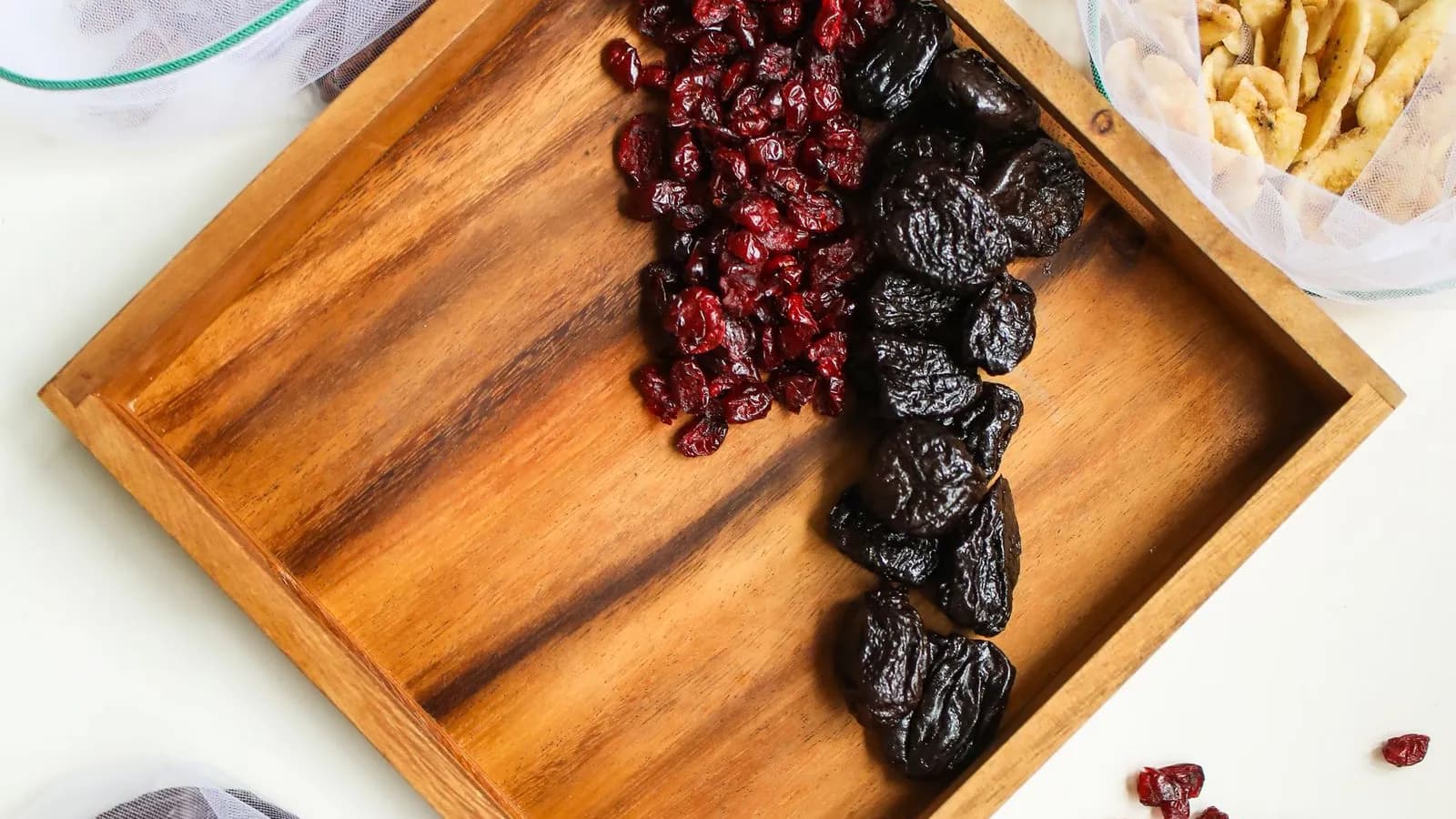
If you buy prunes for Europe, you are most likely buying Chilean ones today: Chile sold 56 % of the dried plums the EU imported from outside the bloc between January and September 2025, and it is the world's largest exporter. California, the quality reference origin, harvests less every year. Argentina is the world's fourth-largest exporter, but it still carries little weight in Europe.
The short answer: all three origins grow the same plum, the D'Agen (Prunus domestica), so the difference is not the variety. It lies in the available size counts, the drying process, the calendar and the tariff. Chile enters the EU duty-free; Argentina pays a tariff that falls every year until it reaches 0 % in 2030. And the ochratoxin A limit for prunes is 2.0 µg/kg, four times stricter than the one for raisins.
This article breaks the purchase down into five decisions: origin, size count, pitted or unpitted, moisture and calendar.
1. Who exports prunes and who buys them
World trade in prunes (heading 0813 20) moves around 210,000 tonnes a year, and a single country sells more than a third of it.
| Country | 2023 exports (t) | Share | Latest data |
|---|---|---|---|
| Chile | 75,105 | 35 % | 88,897 t exported in 2024 to 78 countries |
| Uzbekistan | 25,132 | 12 % | — |
| United States | 23,797 | 11 % | California 2025 crop: ~66,700 t, 4 % less than in 2024 |
| Argentina | 19,991 | 9 % | 2025/26 crop cut by hail: ~15,000 t dried |
| Spain | 9,804 | 5 % | Mostly re-exports |
| France | 9,672 | 5 % | Home of the variety (Agen) |
Sources: 2023 exports from the INC Statistical Yearbook 2024 (world total: 212,332 t). Chile 2024: Chileprunes, via EastFruit. California 2025: 73,500 short tons per the USDA NASS (May 2026). Argentina 2025/26: Sunsweet estimate (March 2026). Accessed September 2026.
On the buying side, Europe takes 42 % of world imports. In 2023 the largest European buyers were Germany (11,289 t), Poland (9,890 t), Spain (8,773 t) and Italy (7,815 t), according to the same INC yearbook.
Within the EU, Chile clearly dominates. According to the Commission's customs surveillance data reported by Mundus Agri, between 1 January and 28 September 2025 the EU imported 28,007 t from outside the bloc: 15,827 t from Chile, 2,885 t from the United States, 2,468 t from Argentina, 2,071 t from Moldova and 1,986 t from Serbia.
World supply is tighter than two years ago. Sunsweet puts the 2025/26 world crop at around 193,000 t, against 211,000 t the previous season. On top of that, China is now the leading destination for Chilean prunes: it took 24,000 of the 75,800 t exported between January and October 2025, according to PortalFrutícola. The European buyer no longer has the Chilean origin to itself.
2. Chile, California or Argentina: what each origin offers
| Chile | California | Argentina | |
|---|---|---|---|
| Variety | D'Agen ("European prune") | Improved French (a D'Agen selection) | D'Agen, overwhelmingly predominant |
| Drying | Oven and sun | Hot-air tunnels only | Sun-drying racks and gas ovens |
| Harvest | February–March | From mid-August, about 30 days | From February |
| New-crop fruit for export | April–June onwards | September–October onwards | April–December, subject to stock |
| Weight in the EU | More than half of extra-EU imports | Small: stays in the US or goes to Asia | Small: the main destination is Brazil |
| EU tariff (0813 20 00) | 0 % | Check in TARIC | ~7.7 % in 2026, 0 % in 2030 |
| Main risk | Competition from China for the same volume | Less acreage every year | Hail and reduced volume |
Sources: Chileprunes (July 2026) for Chile; California Prunes and USDA NASS for California; Government of Mendoza (January 2026) and Senasa for Argentina; tariffs, in section 6.
An honest reading of the table:
Chile is Europe's volume supplier and the one that sets the price. It has the variety, the volume, an established commercial chain in Poland, Germany, Spain and Italy, and zero tariff. Its weak point is no longer supply but the demand competing with you: in the first half of 2026 it exported 29,704 t, 13 % less than a year earlier, and a good share went to China.
California is the large-size, high-price origin. Its bearing acreage has fallen from 45,000 acres in 2016 to 35,000 in 2025, 22 % less in nine years, according to the USDA. Large sizes are scarce and are the ones most in demand on the world market. For European industry, California is a niche origin.
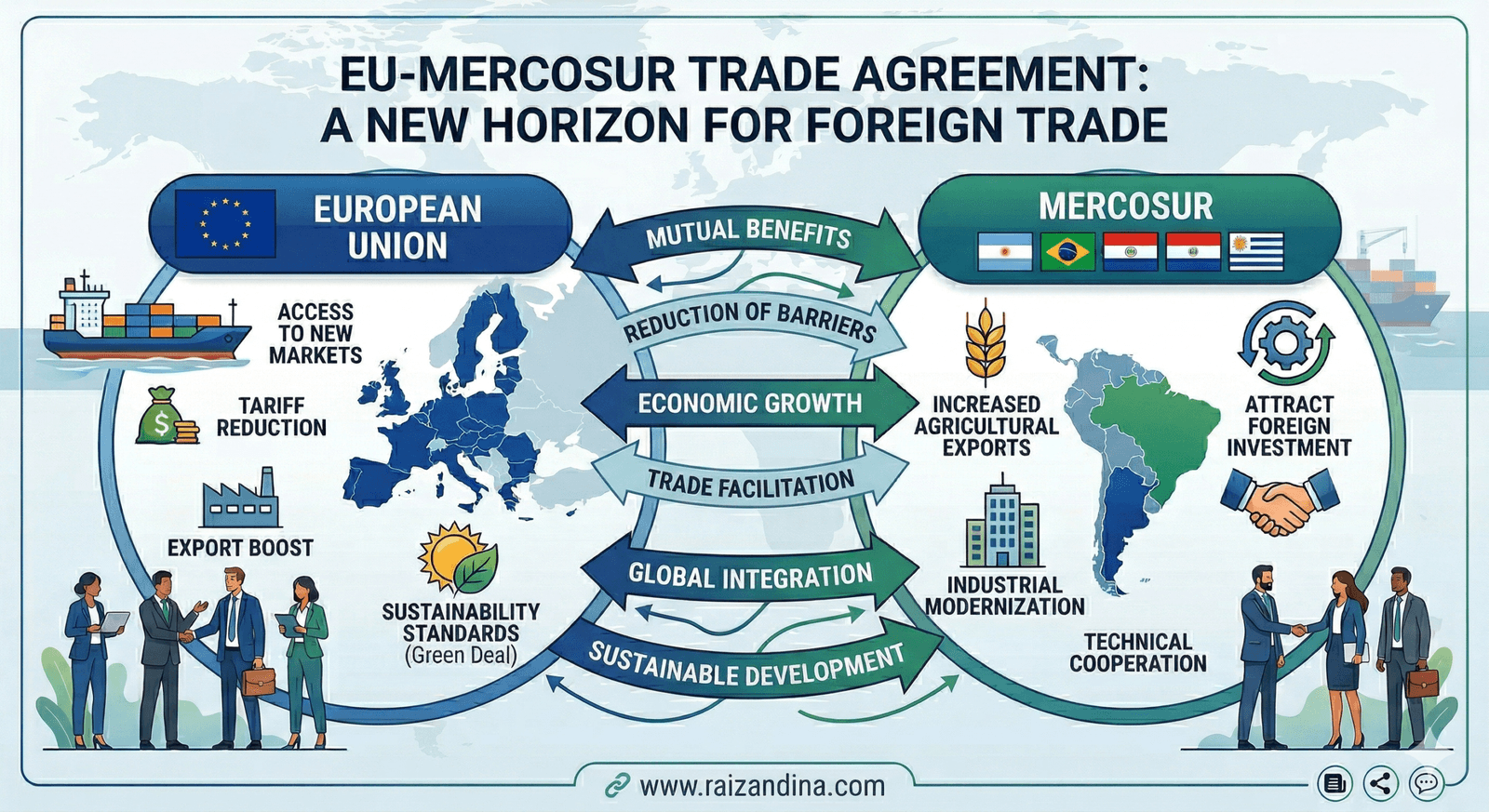
Argentina is a small origin in Europe, and that cuts both ways. Mendoza's 2025/26 crop was 72,879 t of fresh fruit, against 97,728 t the previous season, because of hail. At a ratio of around 3 kg of fresh fruit per kilo dried, that leaves roughly 15,000–24,000 t of prunes, depending on the source. What works in Argentina's favor: the EU-Mercosur interim agreement has applied provisionally since 1 May 2026 and lowers the tariff every year. It is explained in our article on the EU-Mercosur agreement.
3. How to read a size count: 40/50 does not mean the same everywhere
The prune size is a fruit count: how many prunes fit into a unit of weight. The lower the number, the bigger the fruit. The problem is that Chile, Argentina and the United States count per pound (453.6 g), whereas the European UNECE standard allows counting per 500 g, and many European buyers think in units per kilo.
| Count per pound (Chile, Argentina, US) | Equivalent per 500 g | Equivalent per kg |
|---|---|---|
| 30/40 | 33/44 | 66/88 |
| 40/50 | 44/55 | 88/110 |
| 50/60 | 55/66 | 110/132 |
| 60/70 | 66/77 | 132/154 |
| 70/80 | 77/88 | 154/176 |
Conversion: count per 500 g = count per pound × 1.102; per kg = × 2.205.
Three points to avoid mistakes when ordering:
- Always state the unit in the contract. "Size 40/50" on its own can be read per pound or per 500 g, and the difference is about 10 % in fruit size. "40/50 count per pound" allows only one reading.
- The names do not match across standards. The UNECE DDP-07 standard itself warns that its per-500 g designations and those of the per-pound standards "are not correlated". A "Large" in one system is not the "Large" in the other. Use numbers, not names.
- The average size of a crop changes. Chile's 2024 crop came in at an average of around 80 count per pound, that is, small fruit. If your product needs 40/50, ask about availability of that size before committing to the volume.
Our Argentine dried prunes are offered in 30/40, 40/50, 50/60 and 60/70 count per pound.
4. Pitted or unpitted, and how much moisture
Pitted or unpitted
UNECE recognizes two styles: whole, unpitted and whole, pitted. The choice depends on the end use:
- Pitted: what nearly all industry asks for (bakery, fillings, bars, diced product and pastes), as well as retail packing for direct consumption. It is sized after pitting, and the standard allows up to 2 % of fruit with pits or pit fragments. If you manufacture a product where a piece of pit is a serious problem, ask for a lower contractual limit and check whether the supplier runs X-ray inspection.
- Unpitted: cheaper per kilo of fruit and somewhat more stable. It makes sense for bulk, traditional markets and buyers who pit at destination.
Moisture: natural or high-moisture
This is the field that causes the most misunderstandings in a first purchase.
| Natural prunes | High-moisture prunes (tenderized) | |
|---|---|---|
| Typical moisture | Up to ~25 % | 28–35 % |
| Texture | Firm, drier | Soft, ready to eat |
| Preservation | Keeps without additives | Needs a preservative or pasteurization |
| Typical use | Industry that rehydrates or cooks | Direct consumption, snacks, retail |
The UNECE standard sets a maximum of 35 % moisture. Above that, the product has to be labeled high moisture. The USDA standard for dried prunes is stricter for untreated product: maximum 25 % (sizes up to 60 per pound) or 24 % (smaller), unless a preservative is added.
The reason is microbiological. Above 25–28 %, the fruit needs a barrier against yeasts and molds. In the EU there are two legal options:
- Sorbates (E 200–202, sorbic acid and potassium sorbate): maximum 1,000 mg/kg, expressed as sorbic acid, under Regulation (EC) 1333/2008, Annex II, category 04.2.1.
- Pasteurization in the final pack, which the UNECE standard accepts as an alternative.
Sulfites (E 220–228) are also authorized in dried prunes, up to 2,000 mg/kg, but above 10 mg/kg they must be declared as an allergen.
What to ask for in writing: a closed moisture range (for example, 30–33 %) and the preservation method. If you are offered prunes at 32–35 % "with no preservatives", ask how they are kept: pasteurized, in modified atmosphere or in cold storage. If nobody can answer, the spec sheet is not complete.
5. Ochratoxin A and what gets tested in a lot
Ochratoxin A (OTA) is a mycotoxin produced by fungi of the Aspergillus and Penicillium genera, and it appears mainly when fruit is dried in humid conditions. Regulation (EU) 2023/915 sets these limits for dried fruit:
| Contaminant | Limit (µg/kg) | Entry |
|---|---|---|
| Ochratoxin A, raisins and dried figs | 8.0 | 1.2.1.1 |
| Ochratoxin A, other dried fruit (including prunes) | 2.0 | 1.2.1.2 |
| Aflatoxin B1, dried fruit for direct consumption | 2.0 | 1.1.2 |
| Total aflatoxins (B1+B2+G1+G2), direct consumption | 4.0 | 1.1.2 |
The regulation does not name prunes explicitly: since they are not among the raisins and figs of entry 1.2.1.1, the general "other dried fruit" limit applies to them. Accessed September 2026.
The practical consequence is that a supplier used to selling raisins works with an OTA limit four times higher than the one that applies to its prunes. If you buy both, check that the prune certificate of analysis is assessed against 2.0 µg/kg, not 8.0.
What to request with every lot:
- Certificate of analysis covering OTA, aflatoxins, moisture and microbiology (yeasts and molds, E. coli, Salmonella), from an ISO/IEC 17025-accredited laboratory.
- Defect tolerances under the UNECE standard, Class I: fermented fruit ≤ 1 %, pest damage ≤ 2 %, rotten ≤ 1 % (0.5 % in pitted), moldy ≤ 0.5 %, foreign matter ≤ 0.1 % and live pests: zero.
- Pesticide residues against EU MRLs.
How a representative sample is taken from a lot, and why a one-kilo commercial sample does not certify a container, is explained in samples, spec sheets and the first order.
6. Tariff: Chile at zero, Argentina falling until 2030
| Origin | EU tariff, heading 0813 20 00 | Basis |
|---|---|---|
| General duty (third countries) | 9.6 % | Common Customs Tariff |
| Chile | 0 % | 2002 Association Agreement, maintained in the Advanced Framework Agreement |
| Argentina (Mercosur) | ~7.7 % in 2026 → ~5.8 % in 2027 → ~3.8 % in 2028 → ~1.9 % in 2029 → 0 % from 1 January 2030 | EU-Mercosur interim agreement, category 4 (five equal annual cuts) |
Sources: EU tariff schedules in the Advanced Framework Agreement with Chile and in the agreement with Mercosur. The rates for Argentina are the category 4 calculation applied to 9.6 % and may differ by a few tenths from the rate shown in TARIC. Always check the rate in TARIC with your full code on the day of clearance.
Until 2030, Chilean prunes have a real tariff advantage over Argentine ones. For example, on a customs value of USD 3/kg, 7.7 points of duty come to about 23 US cents per kilo. Argentina makes up for it in other ways: size availability, a second origin that reduces risk, and the option of consolidating prunes with other products in the same container.
7. Calendar: when to buy each origin
| Month | California | Chile | Argentina |
|---|---|---|---|
| Jan–Mar | Stock from the August crop | Harvest and drying | Harvest and drying |
| Apr–Jun | Stock 8–10 months old | First new-crop exports; peak in June | New-crop fruit available from April |
| Jul–Aug | End of season; new crop from mid-August | Exports under way | New-crop fruit, 18–25 days' transit to the Mediterranean |
| Sep–Dec | New-crop fruit | Exports under way | Available until December, subject to stock |
Indicative calendar based on Chileprunes, California Prunes, USDA NASS, Senasa and our product sheet. It varies from season to season.
The Southern Hemisphere window runs from May to September: Chilean and Argentine prunes are fruit from that same year, whereas Californian prunes have been in storage since the previous August. It is the same counter-season logic we apply to walnuts, explained in counter-season: why buy from the Southern Hemisphere. If you are buying for the Christmas season (turrón, panettone, fillings), shipments from June to August arrive with time to spare.
If you sell in Italy, the port and buying calendar for the sector is in our article on the Italian market.
Frequently Asked Questions
Which country is the world's largest prune exporter?
Chile. In 2023 it exported 75,105 t, 35 % of world trade according to the INC, and in 2024 it reached 88,897 t. It is followed by Uzbekistan, the United States and Argentina. In the EU, Chile sold 56 % of the prunes imported from outside the bloc between January and September 2025.
What does a 40/50 size count mean for prunes?
That between 40 and 50 prunes fit into one pound (453.6 g). This is how Chile, Argentina and the United States count. It is equivalent to about 44/55 prunes per 500 g or 88/110 per kilo. The lower the number, the bigger the fruit.
Should I buy pitted or unpitted prunes?
Pitted for nearly all industrial uses and for direct consumption; unpitted for bulk and for buyers who pit at destination, because it is cheaper per kilo of fruit. The UNECE standard allows up to 2 % of fruit with pits or pit fragments in pitted prunes.
What moisture content should prunes have?
The UNECE standard sets a maximum of 35 %; above that, the product is labeled high moisture. Natural prunes are around 25 % or less. High-moisture, ready-to-eat prunes are between 28 and 35 % and need sorbates (maximum 1,000 mg/kg in the EU) or pasteurization to keep.
What is the EU ochratoxin A limit for prunes?
2.0 µg/kg, the "other dried fruit" limit in Regulation (EU) 2023/915. It is four times stricter than the limit for raisins and dried figs, which is 8.0 µg/kg.
What tariff do Chilean and Argentine prunes pay in the EU?
Chilean prunes enter at 0 % under the EU-Chile agreement. Argentine prunes pay a tariff that falls every year under the EU-Mercosur agreement: around 7.7 % in 2026 and 0 % from 1 January 2030. The general duty for third countries is 9.6 %.
What is the minimum order for Argentine prunes?
One pallet, about 2,100 kg, in 10 kg cartons or 500 kg big bags. We send 1 to 5 kg samples with the spec sheet before the deal is closed.
We are looking for prune distributors in Europe
We work with importers, distributors and food manufacturers who want a second origin for their prunes alongside Chile. We offer Argentine dried prunes from Mendoza, D'Agen variety, pitted and unpitted, in sizes from 30/40 to 60/70 count per pound, with lot analysis before shipment.
The terms, clear from the start: minimum 1 pallet (~2,100 kg), 1 to 5 kg samples, quotes FOB Buenos Aires, CIF, CFR or DDP, and payment by wire transfer or letter of credit. Prunes can be combined by the pallet with San Juan raisins or with walnuts in the same container, so you do not tie up 20 tonnes in a single reference.
Tell us the end use, the size count, whether you need them pitted or unpitted, the moisture and the destination, and we will send you the samples that make sense for that case. Request samples and a quote or write to us from contact.
Contaminant and additive limits are taken from Regulation (EU) 2023/915 and Regulation (EC) 1333/2008 as in force in September 2026. Production, trade and tariff figures are those published by the cited sources on the date accessed and may be revised. Raíz Andina's specifications are those of the product sheet published on that date. This article does not constitute legal or customs advice.